
Drowning according to World Health Organization is the process of experiencing respiratory impairment from submersion or immersion in liquid. That is, when liquid such as water is inhaled into the lungs and prevents breathing.
Drowning is a major cause of injury and death in children. Once a child begins to move either by crawling, cruising or walking watch out for factors that lead to drowning and prevent them.
Children are very curious and are easily absorbed in their immediate interest and oblivious to their environment. They are inexperienced and lack understanding of the consequences of many new situations they encounter daily.
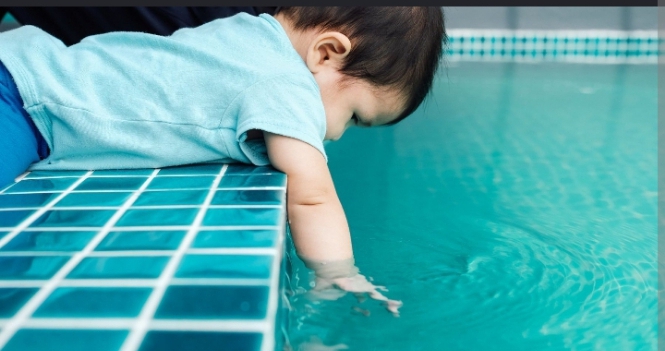
Babies and toddlers can drown in bath tubs, pools, buckets filled with water . Drowning in children can be quick and silent.
Drowning amongst children happens in a case of unsupervised access to water.
Drowning can be fatal and non fatal ( in a case of survival after the experience, see a doctor immediately).
Prevention of drowning
The WORLD HEALTH ORGANIZATION says that controlling access to water hazards greatly reduces water hazard exposure and risk.
To prevent drowning in children, the following measures should be in place.
- Supervision and control of children near and around water. Wether in a beach or pool, keep close watch on the children around.
- Keep buckets empty and out of children’s reach after use. Children may try to enter into a bucket and could drown in a case where it was full of water.
- Keep pools fenced properly.
- Keep bathroom doors locked. Don’t take chances, lock the door to every bathroom door.